Biographie
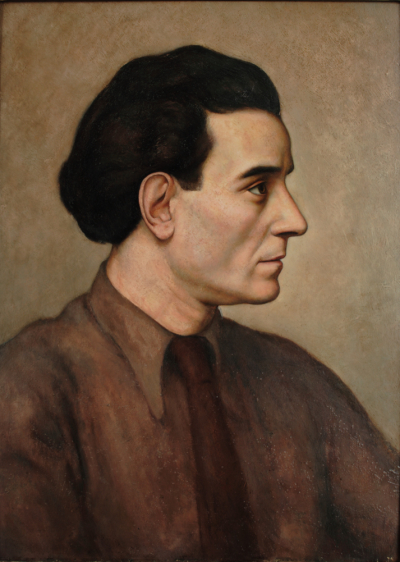
Huile sur panneau
56 x 40 cm
Exécuté en 1939 par son ami Auguste Trémont
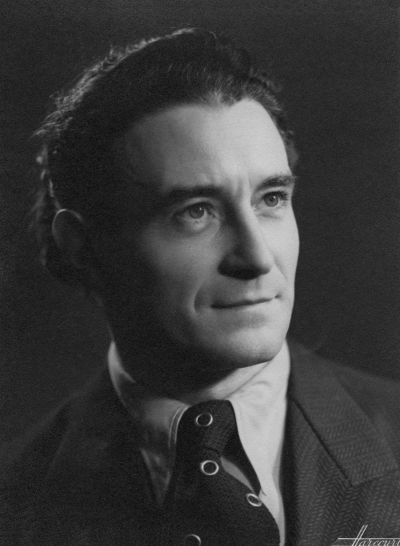
Photographie studio Harcourt
Archives familiales
Gaston Suisse est né à Paris le 1er décembre 1896, et est décédé à son domicile parisien, dans le 13éme arrondissement, le 7 mars 1988. Il est né dans une famille d'artistes, son frère était violoniste, son père, collectionneur et bibliophile, possédait une bibliothèque de plus de 10 000 ouvrages, dont une très belle documentation sur l'art japonais et chinois.
Très tôt, il lui donna le goût des livres et de l'art d'Extrême-Orient, ceci n'étant sans doute pas étranger à sa vocation. Dès l'âge de 5 ou 6 ans, il commença à reproduire les planches des livres de son père, dessina son chat et se montra tout de suite très doué. Son père l'encouragea dans cette voie, lui faisant très tôt visiter les plus grands musées. Il l'emmena régulièrement au Jardin des Plantes, le jeune Gaston Suisse y découvrit de nouveaux modèles, observant longuement les animaux pour en faire des croquis. à 15 ans, c'est au Jardin des Plantes qu'il rencontra Paul Jouve, artiste déjà célèbre et confirmé. Tout de suite l'amour des animaux, l'observation et le dessin les rapprochèrent et marquèrent le début d'une longue amitié. Jouve lui parla avec enthousiasme des zoos d'Anvers et de Hambourg, où les animaux n'étaient pas en cage, donc un peu plus proche des conditions naturelles, ce qui permettait une observation plus intéressante. Gaston Suisse l'accompagnera deux ans plus tard à Anvers et y fera la connaissance du sculpteur Bugatti, ami de Jouve.
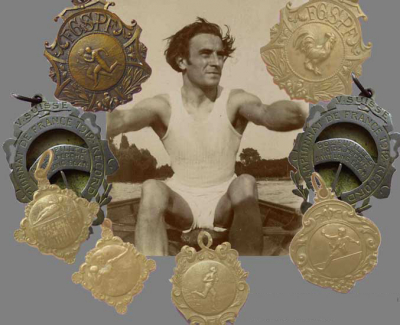
Dans les années 20, à Chatou.
Archives familiales
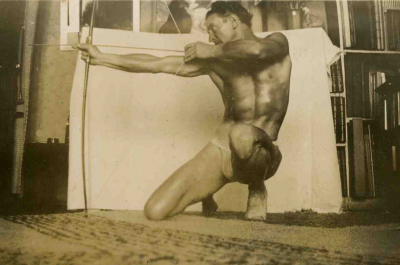
Archives familiales.
Reçu au concours de l'école nationale supérieure des Arts Décoratifs, il y apprendra les rudiments du métier de laqueur. Tout de suite fasciné par la matière, il n'aura de cesse d'apprendre, de se documenter et d'expérimenter. Il obtient une médaille d'or de la Ville de paris, en 1913 et en 1914 pour ses premiers travaux. Gaston Suisse fut également très sportif. Il pratiqua l'aviron, sera champion de France en saut à la perche, au 100 mètres, puis en décathlon. Il accumulera les médailles jusqu'à 1913. Dans l'été 1913, il effectue un premier voyage en Algérie, passant des vacances chez des parents, ces premières vacances loin du giron familial, le marqueront durablement.
Gaston Suisse posant en tireur à l'arc, dans son atelier, rue de Tolbiac, dans les années 30.
Il utilisera ces photos comme modèle pour ses panneaux sur la chasse à l'arc.
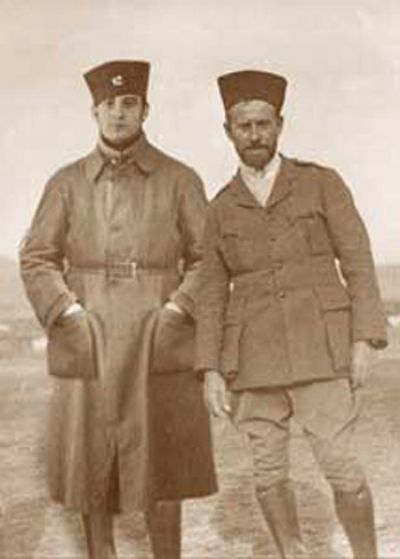
Armée d’Orient, Salonique
Archives familiales
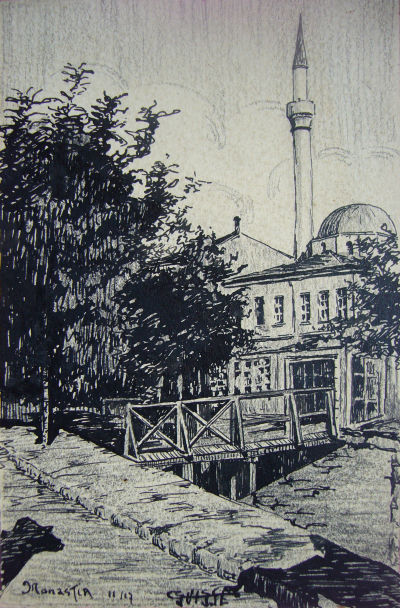
13,5 x 9,5 cm
Archives familiales
Mobilisé en 1914, il combattra dans les tranchées à Verdun, puis partira avec l'armée d'Orient vers Salonique où il retrouvera Jouve, lui aussi mobilisé. Durant toute la guerre il enverra régulièrement à son école, croquis et billets qui seront publiés dans le journal de l'école. La guerre terminée, il reprendra ses études à l'école des Arts Décoratifs. Ses recherches personnelles et ses essais le conduisirent à faire une année supplémentaire à l'école des Arts Appliqués pour y parfaire, entre autres, les techniques de dorure et apprendre la chimie des oxydes sur métaux. Un de ses amis, Dang Bui, laqueur annamite lui ramena les premiers pots de laque végétale, ce qui lui permit de mettre en pratique ses expériences. Il maîtrisa très vite les incrustations de coquilles d'œufs, et le travail de la feuille d'or, rapidement il mettra au point des techniques novatrices, pour obtenir des laques d'une originalité et d'une richesse sans pareil. Il effectua des recherches sur l'utilisation des processus d'oxydations. Très tôt, pour s'affranchir en partie des contraintes liées à l'utilisation des laques végétales, Gaston Suisse utilisa des dilutions de laques végétales dans des huiles ou des alcools. L'adjonction d'huile de camphre, par exemple, rendait la laque plus liquide, et donc plus facile d'emploi.
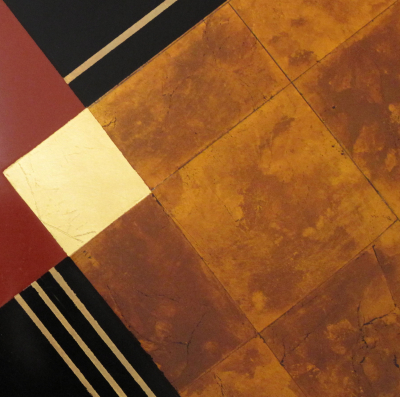
Sur fond de laque noire.
L'adjonction de siccatifs permettait également de réduire les temps de séchage. Ses recherches le conduisirent à utiliser des vernis synthétiques, lui permettant ainsi de s'affranchir de certaines contraintes, liées à l'utilisation de la laque végétale. Dans la mesure où il devenait possible de mélanger des pigments colorés au vernis, la gamme chromatique disponible devenait beaucoup plus large, et les temps de séchage s'en trouvait par ailleurs considérablement raccourcis. Si la technique restait la même, ces nouveaux produits permettaient l'utilisation du pistolet, l'obtention de laques écailles avec toutes les nuances possibles pouvait désormais être obtenue directement et non plus par ponçages successifs. Il devenait possible d'ajouter au vernis une multitude de composants, permettant ainsi une très grande variété d'effets.
Gaston Suisse eut l'idée de piler des écailles d'ablettes, de les ajouter à la laque, obtenant ainsi des nuances anthracite d'une incroyable richesse donnant à ses créations, une préciosité et une distinction étonnante.
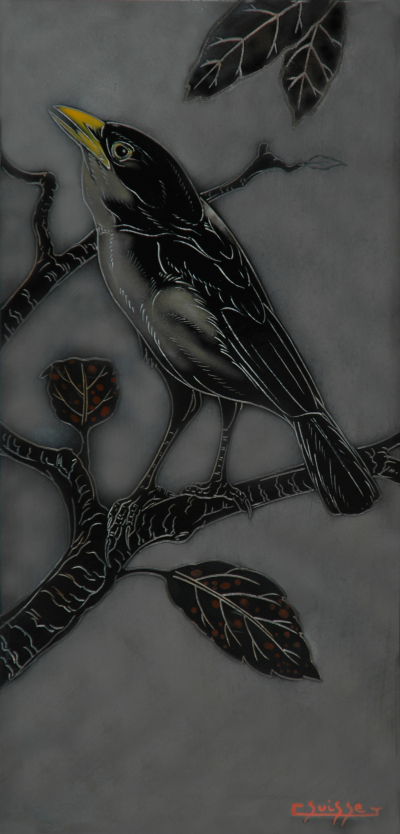
Merle branché, vers 1930.
Laque noire gravée, rehauts de laques polychromes.
Laque et poudre d'aluminium, sur fond de laque écaille d'ablette.
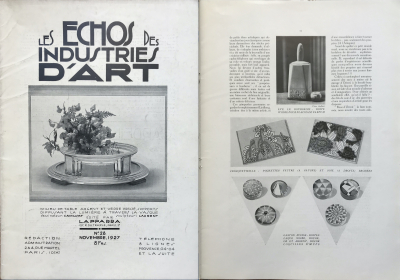
N° 28. Novembre 1927
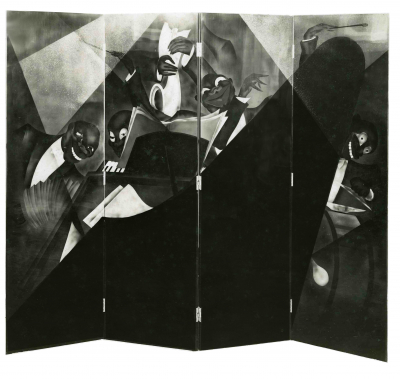
laque noire et écaille foncée.
Coquille d'oeuf en pluie.
Gaston Suisse exécuta des meubles et objets en laque de chine, décoré dans un style abstrait et géométrique qui fut la marque de sa recherche personnelle. Artiste fondateur de ce qui sera appelé la période Art Déco, Gaston Suisse rencontra immédiatement un très large succès, il fut nommé sociétaire du Salon d'automne dès sa première exposition. Les critiques furent élogieuses et unanimes: c'est ainsi que M. Tisserand écrivit dans la revue L'Art Vivant. "Nous signalons tout particulièrement les laques de Gaston Suisse. Il représente des laques où son invention se déploie magiquement. Nous avons remarqué avec plaisir qu'elles obtiennent un vif succès auprès des visiteurs du salon". M. Derys dans la revue Mobilier et Décoration, écrivait: "Rien n'est plus charmant que cet art traité avec un esprit fin avide de découvertes, les panneaux laqués de Suisse unissent la somptuosité au sens le plus épanoui et le plus libre de la composition décorative". Dans les Echos d'Art du mois de décembre 1930, Il rendait également compte de la qualité et de l'originalité des paravents exposés cet année là.
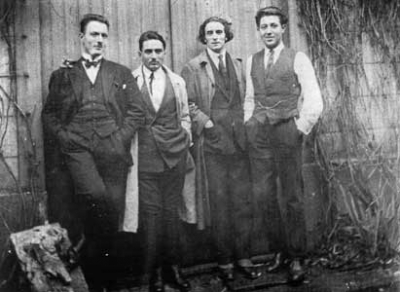
De gauche à droite:
Armand Brugnaud, Lemaire,
Gaston Suisse et Paul Arzens.
Photographie d'époque, 1924.
Archives familiales.
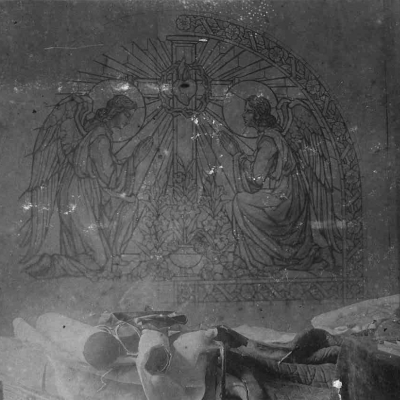
Éxécuté pour Jean Perzel.
Atelier de Gaston Suisse.
Photographie d'époque.
Archives familiales.
Gaston Suisse, comme d'ailleurs beaucoup d'artistes de cette époque, se présentait comme décorateur. Chargé de la décoration de l'Alhambra d'Alger, à la fin de l'année 1924, il parcourut ensuite le Maghreb et en ramena de nombreux croquis d'antilopes, de gazelles, de singes magots, et de fennecs. Au début de l'année 1925, fasciné par le Sud, il traversa le Sahara en caravane, descendit jusque dans le Tassili, en pays Touareg, puis vers l'Afrique, d'où il ramena de très nombreuses études.
De retour à Paris, il exécuta pour Maurice Dufresne la décoration du pavillon de la maîtrise des Galeries Lafayette. Parallèlement à sa production de laqueur, il créa des projets de tissus pour Madame Duchesne, exécuta des cartons de vitraux pour Jacques Grubber, et pour son ami Jean Perzel, dessina des décors pour l'Opéra de Paris et des costumes pour la Comédie Française. Refusant toutes les sollicitations, il préférait se tenir à l'écart des mondanités, recherchant plutôt le calme et la sérénité de son atelier. C'est d'ailleurs son ami Paul Jouve qui le poussera à exposer ses premières réalisations. Exposant à la galerie Brandt, avec le Groupe des Animaliers, il dessina pour ce dernier des grilles d'intérieur et des caches radiateurs qui furent exécutés en fer forgé. Il réalisa pour les ensembliers, Jansen, Straub, Brandt, Ruhlmann et Boyer, des meubles et des panneaux laqués et décorés, et pour Hermès une centaine de coffrets laqués destinés à être vendus aux États-Unis.
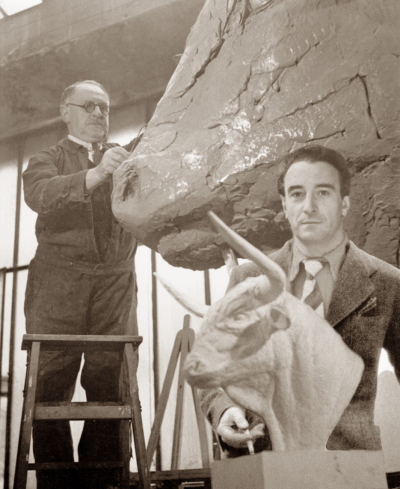
Gaston Suisse au 1er plan.
Paul Jouve au 2e plan.
Archives familiales.
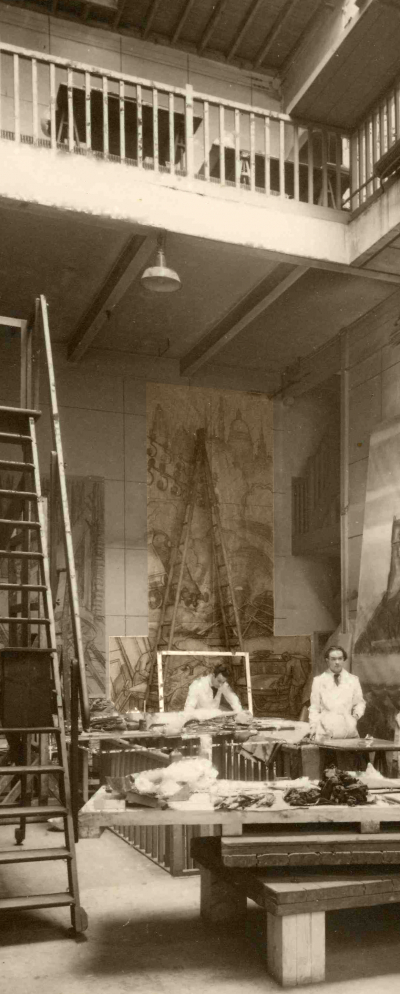
Son travail et ses réflexions sont le reflet d'une très large culture, qu'il ne cessera de parfaire. Pour échapper aux contraintes liées à l'utilisation des laques végétales, il mettra au point et utilisera des vernis synthétiques, permettant d'obtenir une gamme chromatique plus large. Cela ne donnera que davantage de splendeur à ses compositions animalières. Gaston Suisse ne s'est pas contenté de représenter la faune et la flore. Son œuvre très variée représente avec autant de bonheur des paysages, des personnages, ou encore d'immenses compositions, comme celle commandée par la ville de Paris pour l'Exposition Internationale de 1937. À cette occasion, et compte tenu de la taille monumentale des panneaux à exécuter pour cette commande, il loue avec son ami Paul Jouve, un très grand atelier rue Lebouis, à Paris. Pour cette commande, Gaston Suisse devait exécuter un ensemble de panneaux de laque, représentant les arts et la technique dans la modernité de 1937. Cet ensemble devait décorer la grande galerie et les salons de réception du conseil municipal. Dans son décor, Gaston suisse rend hommage aux artistes, aviateurs et entreprises qui participent au rayonnement international de la France. Le laqueur inscrit son œuvre dans une réalité spatiale et temporelle par le choix de protagonistes contemporains qui peuvent être reconnus par les spectateurs du Palais de la Ville de Paris. Cet aspect du décor rappelle également que le lieu dans lequel il est exposé, s’adresse à un public sélectif particulièrement cultivé et intégré dans les cercles artistiques, politiques et industriels de cette époque. L'oeuvre de Gaston suisse reflète très subtilement les changements qui sont liés à la transformation du monde moderne grâce à l'avancée des nouvelles technologies.
Atelier de la rue Lebouis. 1936. Gaston Suisse est debout à droite.
Au fond de l'atelier on aperçois les panneaux en cours d'exécution.
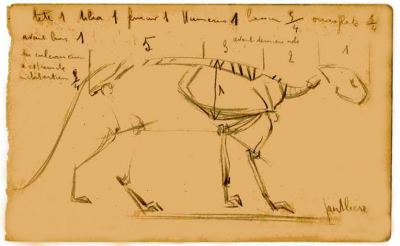
Proportion d'une panthère.
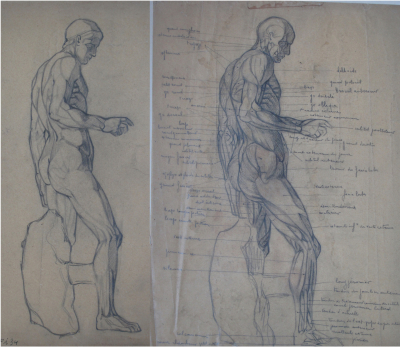
22 x 16,5 cm.
Cécile Ritzenthaler écrit lors de la publication d'un de ses catalogues, : "Chacun de ses portraits d'animaux est non seulement d'une parfaite qualité graphique mais aussi bien inscrit dans le mouvement des années 30. Aucun spécialiste de tel oiseau ou de tel mammifère ne put reprocher la moindre erreur anatomique à Gaston Suisse, tant l'observation du modèle fut précise et le rapport liant l'artiste et l'animal furent proches de la complicité".
À nouveau mobilisé pendant la Deuxième Guerre Mondiale, il fut fait prisonnier. Il réussit à s'évader et à rejoindre la zone libre, se grava des faux papiers de démobilisation et regagna Paris.
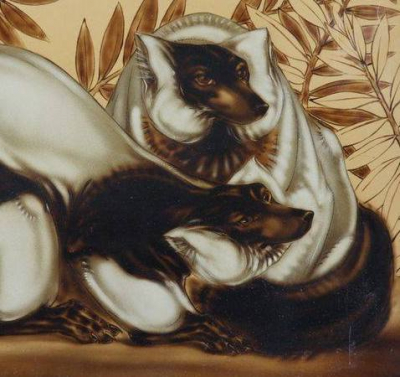
Laque polychrome.
Haut. 43 cm, Larg. 69 cm.
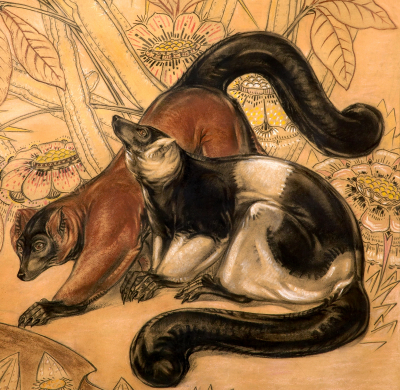
Crayon et pastel à l'huile.
Haut. 140 cm, larg. 90 cm.
Il se remit au travail malgré les difficultés de l'époque. Et rencontra celle qui deviendra sa femme, et qui, malgré son très jeune âge, avait déjà une personnalité hors du commun. Elle obtint, à 15 ans, le premier prix du concours général en littérature. Son journal, très touchant, très original et anti-conformiste, reflète une maturité et une force de caractère exceptionnelles pour son âge. En révolte permanente contre sa famille qu'elle exècre, sa rencontre à 18 ans avec Gaston Suisse sera déterminante. Gisèle quittera sa famille, bravant tous les interdits, abandonnera sa préparation à l'école Normale supérieure, pour suivre celui qui deviendra son époux.
Cette période de l'occupation fut, pour le couple, particulièrement difficile, ses parents la faisant rechercher par la police car Gisèle n'était pas majeure. C'est pourtant elle qui assumera le quotidien, plus mature et débrouillarde que son futur mari, toujours déconnecté de toutes contingences matérielles. Malgré une grande différence d'âge, ils formèrent un couple en parfaite osmose et restèrent unis jusqu'au décès de l'artiste. Ce couple fut exemplaire, connaissant une vie familiale épanouie avec la naissance de leur fils. On retrouve cette sérénité dans son œuvre, son bonheur transparaît dans ses créations, les animaux étant souvent représentés par couples, et emprunts d'une émotion étonnante.
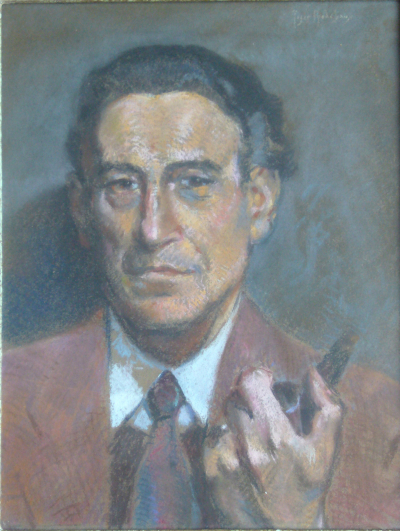
Pastel sur papier
36 x 27,5cm
Exécuté vers 1945,
par son ami Roger Godchaux.
Après la guerre, les expositions reprirent avec succès. Gaston Suisse travailla sans se soucier du reste du monde, il refusait tout ce qui lui semblait une perte de temps. Refusant toute responsabilité dans les groupes d'artistes dont il fut sociétaire pendant des années. Il n'accordait aucun temps aux journalistes, refusant toutes propositions l'éloignant de son atelier, considérant, au grand dam de sa famille qu'il s'agissait de temps perdu. S'investissant totalement dans son art. Partageant son temps entre l'étude des animaux sur le terrain, ou même chez lui où il éleva tour à tour oiseaux, serpent, mangouste et autres animaux exotiques, et ses réalisations en laque à l'atelier. Acceptant seulement d'exposer ses œuvres aux différents salons dont il était sociétaire. Ces laques recueillirent toujours un large succès et furent systématiquement vendues. Hélas, une grande partie partira aux Etats-Unis, et en Amérique du sud.
Gaston Suisse prend naturellement sa place parmi celle des plus grands artistes du XXe siècle. Ses œuvres sont aujourd'hui très recherchées et internationalement reconnue sur le marché de l'art. Son parcours fut particulièrement novateur et épris de liberté. Son œuvre, extrêmement originale et personnelle, est celle d'un homme très cultivé, passionné de recherches et d'expériences nouvelles. Ceci explique sans doute son rayonnement, comme en témoigne la présence de ses œuvres dans les collections publiques et privées, tant en France qu'à l'étranger. Le musée de Vernon lui a consacré une très belle rétrospective en 2000. Pour son centenaire en 2004, le Dallas Museum of Art organisa une très importante exposition intitulée "Passion for Art, 100 treasures, 100 years'". Cette exposition rassemblait cent chefs d'œuvres choisis dans les collections du musée. Un cabinet trois portes en laque à décor d'oiseaux fut choisi et exposé. En 2006 le Musée des Beaux Arts de Reims organisa une exposition "l'Art Déco de Reims à New York", où figurait un grand et impressionnant pastel à décor d'aigrettes, et une exceptionnelle table basse en laque de chine à décor d'incrustation de coquilles d'œufs.